Where to invest $100,000: Excel dashboard presents 4% rule
The investor's Excel dashboard clearly shows where to invest $100K, the 4% rule versus the Vanguard strategy. For a fair analysis, it uses three S&P 500 index market forecast scenarios and presents the capital result 10 years ahead.
Strategy for Investing Personal Finances in Excel
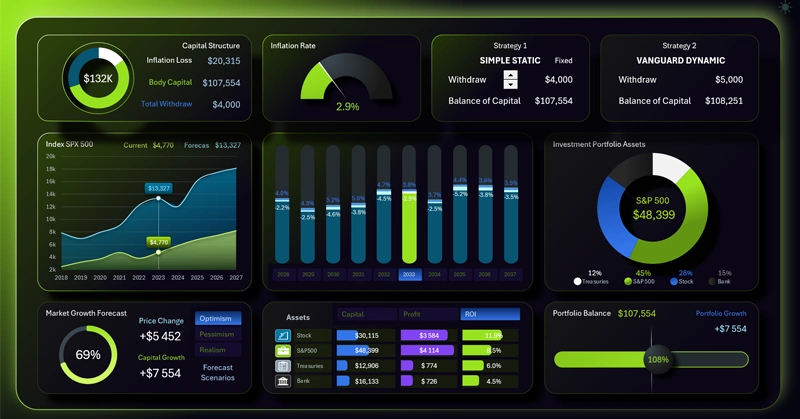
Fixed amount, floating percentage, or Vanguard dynamics: how withdrawing 4% of the current balance changes the fate of capital over a 30-year horizon.
Saving your first $100,000 is only half the task. The other half: what to do with it so that inflation doesn't eat the capital and regular income doesn't deplete it ahead of schedule. In Buffett's famous bet, a simple S&P 500 index grew 125.8% over ten years, while five teams of hedge funds grew only 36.3%. This Excel dashboard turns that logic into a working tool: two withdrawal methods, three tactics, and three market scenarios in one file show how your capital will behave in good and bad years — before you invest the first dollar.
Main screen of the investment dashboard:
- Summary chart of capital structure (inflation losses, remaining principal, withdrawn profit).
- Inflation speedometer.
- S&P 500 index line chart with a 10-year forecast.
- Block of scenario switch buttons:
- optimistic;
- pessimistic;
- realistic.
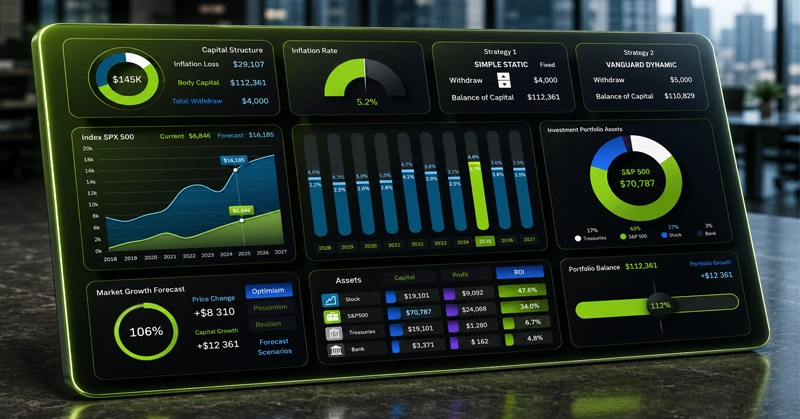
Dashboard for forecasting personal capital investments in Excel
The main takeaway of the dashboard is simple: the right strategy depends on the horizon. Over ten years, in every scenario, Vanguard's dynamic method wins, while over a horizon of more than thirty years, withdrawing 4% of the current capital balance wins, which grows both the capital itself and the size of the payouts. But no strategy works without understanding that the numbers in a brokerage account are not yet money in your pocket. That's why the template's value lies not in a ready-made answer, but in the ability to live through different scenarios in advance, prepare actions for the worst and best cases, and make decisions calmly rather than under the pressure of emotions.

Data Visualization Charts for Interactive Report Creation in Excel.
Dashboard Templates